
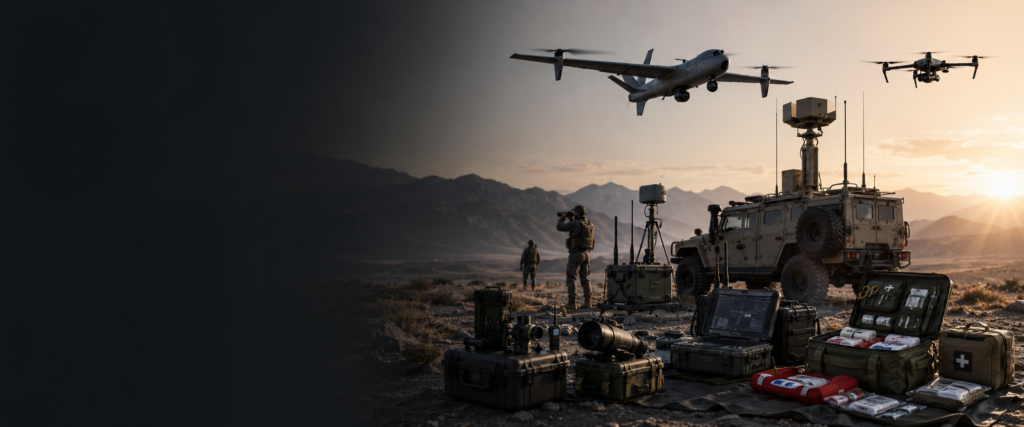
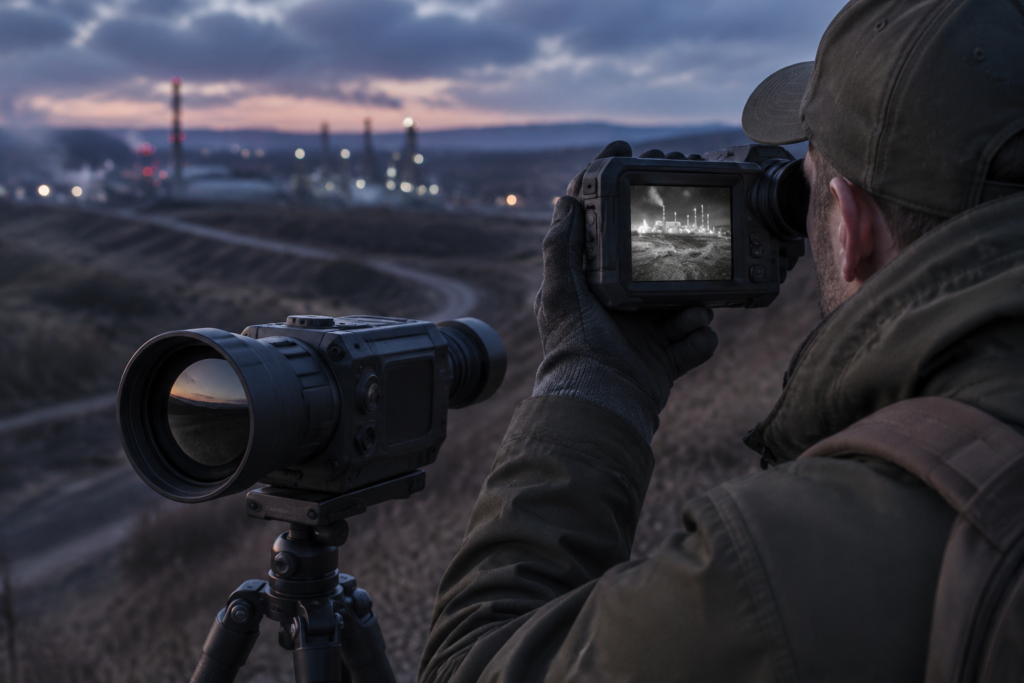
Professional Thermal Imaging Cameras detect infrared radiation emitted by people, vehicles, equipment and other objects, producing clear thermal images without relying on visible light. They provide reliable day-and-night observation in complete darkness, low visibility and challenging environmental conditions, making them suitable for security, industrial inspection, emergency response and continuous monitoring applications.
Depending on operational requirements, solutions can include cooled or uncooled thermal detectors, fixed or motorized lenses, dual-spectrum imaging and stabilized platforms. Dual-spectrum models combine thermal and high-definition visible-light cameras, enabling operators to compare heat signatures with visual imagery for more accurate identification and assessment.
Advanced functions may include digital image enhancement, temperature measurement, automatic target detection, hot-spot alarms, video recording and real-time data transmission. Thermal cameras can operate independently or integrate with surveillance networks, UAV platforms, vehicles, perimeter-security systems and command-and-control platforms.
Typical capabilities include:
- Day-and-night thermal observation
- Imaging in complete darkness
- Human, vehicle and equipment detection
- Long-range observation options
- Cooled and uncooled detector configurations
- Fixed, zoom and continuous-zoom lenses
- Dual-spectrum thermal and visible-light imaging
- Image enhancement and noise reduction
- Automatic target detection and tracking
- Temperature measurement and hot-spot alarms
- Real-time video transmission and recording
- Fixed-site, portable, vehicle-mounted and airborne deployment
- Weather-resistant outdoor configurations
- Integration with surveillance and command systems
Thermal imaging solutions can be configured according to detection range, detector resolution, spectral band, lens type, temperature-measurement requirements and deployment environment. They support border and perimeter security, critical infrastructure protection, industrial inspection, firefighting, search and rescue, environmental monitoring and other applications requiring reliable observation under limited-visibility conditions.