

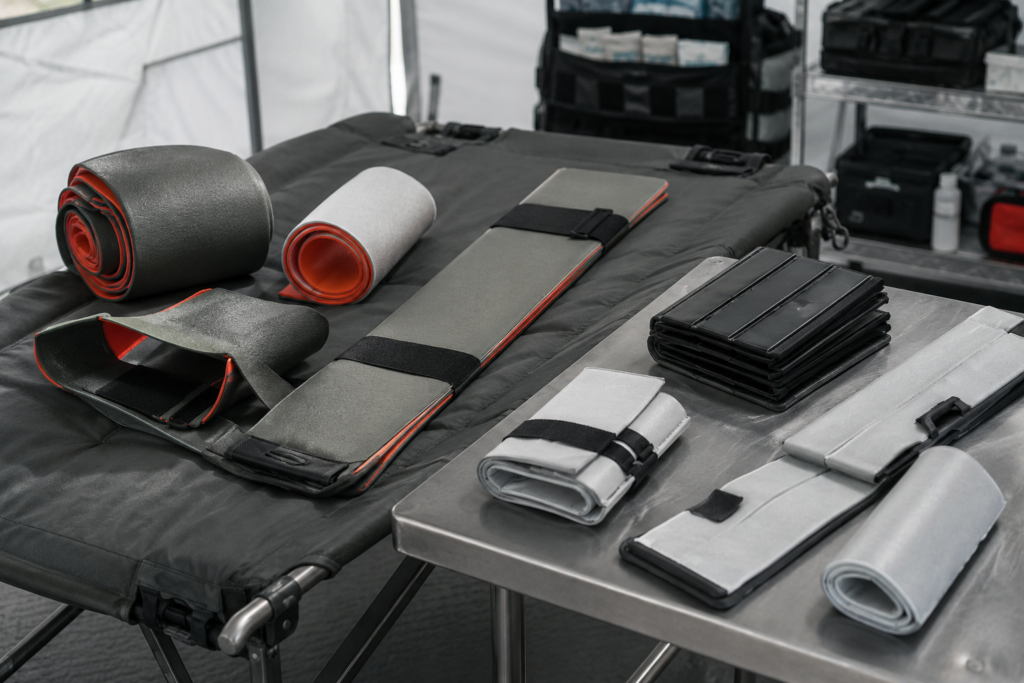
Portable Medical Splints are designed to support the temporary stabilization and immobilization of injured limbs during emergency treatment, patient transport and evacuation. By limiting unnecessary movement, they help trained responders protect the affected area until appropriate clinical assessment and definitive care are available.
Depending on operational requirements, available solutions can include moldable splints, padded rigid splints, vacuum splints, traction splints, finger splints and complete immobilization sets. Lightweight and compact designs allow them to be carried in trauma bags, ambulances, rescue vehicles and field medical kits.
Moldable splints can be shaped to different limbs and body contours, while vacuum systems provide adjustable support around irregular injuries. Rigid and padded models offer quick stabilization for common emergency applications. Some products are radiolucent, allowing diagnostic imaging to be performed without immediate removal where clinically appropriate.
Durable, moisture-resistant and easy-to-clean materials support use in field, pre-hospital and emergency-care environments. Reusable models should be cleaned and inspected according to the manufacturer’s instructions after each use.
Typical products and features include:
- Moldable universal splints
- Padded rigid splints
- Vacuum immobilization splints
- Traction splints for trained professionals
- Finger and wrist splints
- Arm and leg immobilization systems
- Adjustable fastening straps
- Lightweight and compact construction
- Foldable or rollable storage formats
- Radiolucent material options
- Water- and moisture-resistant surfaces
- Reusable and single-use configurations
- Adult and paediatric sizes
- Carrying bags and complete splint sets
- Integration with trauma and emergency medical kits
Splint solutions should be selected according to the injury type, responder qualification, transport requirements and applicable medical protocols. Splints should be applied only by appropriately trained personnel, with circulation and patient condition monitored in accordance with professional guidance. Suspected fractures, dislocations and spinal injuries require prompt medical evaluation.