
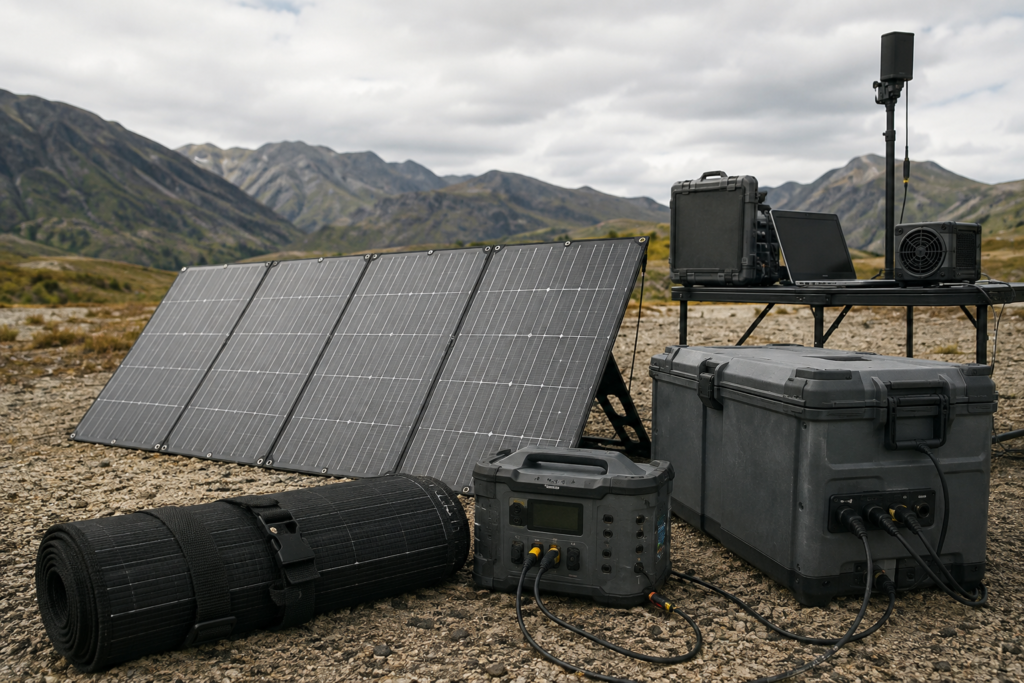
Professional Deployable Solar Power Systems provide renewable off-grid energy for remote operations, emergency facilities, temporary sites and long-duration field deployments. By combining solar panels, charge controllers, battery storage, inverters and power-distribution equipment, these systems can supply electricity where conventional grid infrastructure is unavailable or unreliable.
Depending on operational requirements, available solutions can include foldable solar panels, portable solar blankets, rigid panel arrays, trailer-mounted systems and containerized power units. Modular designs allow generation and storage capacity to be expanded according to equipment load, available installation area and required operating time.
Maximum Power Point Tracking (MPPT) charge controllers help optimize energy collection under changing sunlight conditions. Integrated battery-management and monitoring systems display solar input, battery status, power consumption and estimated remaining runtime.
Solar systems can operate independently or form part of a hybrid power architecture with generators, grid connections and vehicle charging. This combination can improve continuity during poor weather, seasonal changes or periods of high energy demand.
Typical products and capabilities include:
- Foldable and portable solar panels
- Flexible solar blankets
- Rigid panel and ground-mounted arrays
- Trailer-mounted solar power systems
- Containerized and shelter-integrated solutions
- MPPT solar charge controllers
- Modular battery energy storage
- Pure sine-wave inverters
- AC and DC power distribution
- Solar, grid and generator hybrid operation
- Real-time energy monitoring
- Remote system diagnostics
- Rugged cables, connectors and protective cases
- Rapid-deployment frames and mounting systems
- Expandable generation and storage capacity
Solar power solutions can be configured according to daily energy demand, peak load, solar conditions, battery autonomy, transport limitations and deployment duration. System sizing should account for seasonal solar availability, conversion losses and backup-power requirements. Electrical protection, grounding, weather resistance, battery safety and applicable certifications should be verified for the intended market and installation environment.