

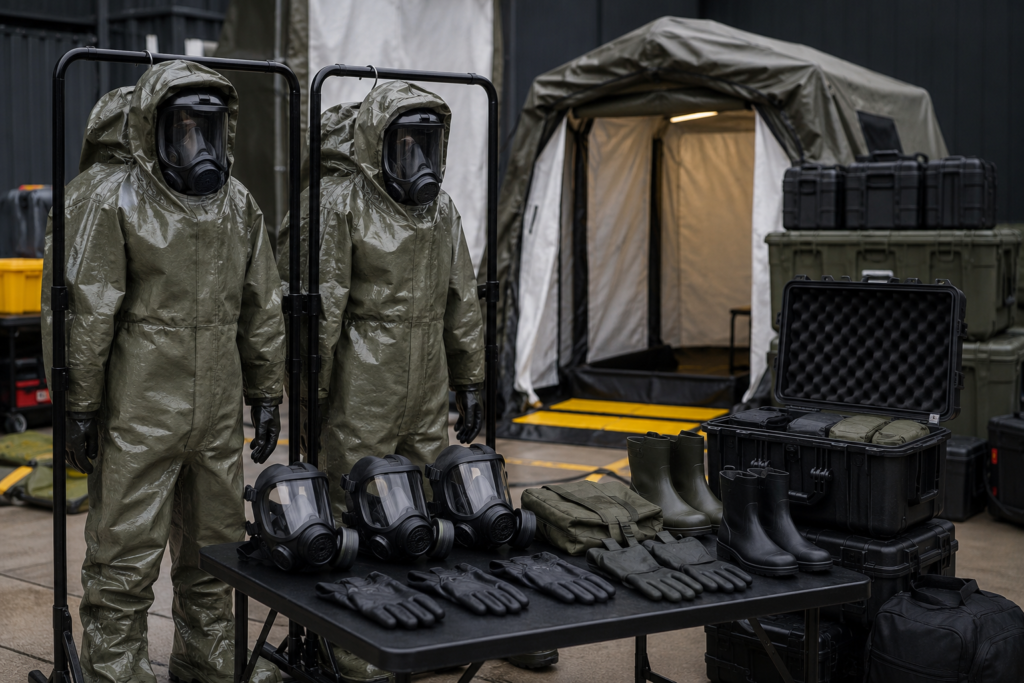
Professional Respiratory Protection solutions help reduce personnel exposure to airborne particles, dust, aerosols, gases, vapours and other respiratory hazards in industrial, emergency-response and contaminated working environments. Available options range from disposable filtering masks to reusable respirators and powered air-purifying systems.
Depending on the identified hazard, solutions can include filtering facepiece respirators, half-mask respirators, full-face respirators, powered air-purifying respirators and supplied-air systems. Replaceable particulate filters, gas cartridges and combination filters can be selected for specific contaminants and exposure conditions.
Half-mask respirators provide compact respiratory coverage, while full-face models combine respiratory, eye and facial protection. Powered systems use a motorized blower to deliver filtered air to a mask, hood or helmet, helping reduce breathing resistance during extended use. Supplied-air configurations may be required where filtration alone is insufficient.
Adjustable head harnesses, soft sealing surfaces and low-resistance valves support secure fitting and user comfort. Selected systems can integrate with protective helmets, communication equipment, face shields and chemical-protective clothing.
Typical products and features include:
- Disposable filtering facepiece respirators
- Reusable half-mask respirators
- Full-face respirators
- Powered air-purifying respirators
- Supplied-air respiratory systems
- Particulate filters
- Gas and vapour cartridges
- Combination filtration options
- Replaceable filter and cartridge systems
- Adjustable head harnesses
- Exhalation-valve options
- Panoramic full-face visors
- Communication-compatible configurations
- Protective hoods and helmet integration
- Storage, cleaning and fit-testing accessories
Respiratory protection must be selected through a documented hazard assessment considering contaminant type, concentration, oxygen level, exposure duration and required protection factor. Product certification, filter compatibility, service-life limits and facial fit requirements should be verified against applicable standards. Tight-fitting respirators require proper fit testing, training and inspection; air-purifying respirators must never be used in oxygen-deficient or immediately dangerous environments unless specifically approved for those conditions.