

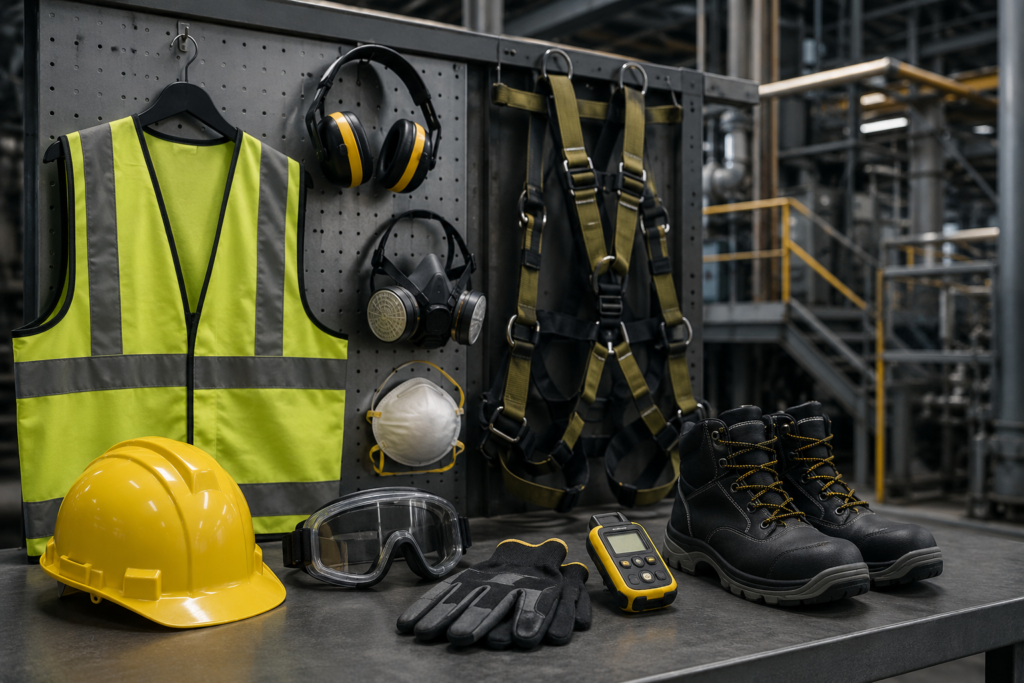
Professional Industrial Safety Equipment provides comprehensive personnel protection and workplace risk-control solutions for construction, manufacturing, energy, mining, logistics and other demanding industrial environments. Products can be selected individually or supplied as coordinated safety packages according to identified hazards, job functions and operating conditions.
Available personal protective equipment includes helmets, eye and face protection, hearing protection, respirators, gloves, protective clothing, safety footwear and fall-protection equipment. Supporting workplace-safety products can include gas detectors, emergency showers, eyewash stations, warning signs, barriers, spill-control materials and lockout/tagout devices.
Equipment is available for routine occupational hazards as well as specialized environments involving work at height, confined spaces, chemicals, electricity, heat, noise and low visibility. Ergonomic designs and compatible equipment combinations help maintain protection while supporting mobility, comfort and efficient work.
Customized safety packages can be prepared for individual workers, maintenance teams, vehicles, workshops and complete industrial sites. Product selection can also account for climate, wearing duration, workforce size and replacement requirements.
Typical products and solutions include:
- Industrial safety helmets
- Protective glasses and face shields
- Hearing-protection equipment
- Respirators and filtration systems
- Work gloves and chemical-resistant gloves
- Protective clothing and high-visibility garments
- Safety boots and protective footwear
- Fall-arrest harnesses and connecting equipment
- Portable and fixed gas detectors
- Emergency eyewash and shower equipment
- Spill-control and containment supplies
- Lockout/tagout equipment
- Safety signs, cones and barriers
- Confined-space safety equipment
- Customized PPE and workplace-safety packages
Industrial safety solutions should be selected through a documented workplace hazard assessment and integrated into appropriate training, inspection and maintenance programs. Product ratings, compatibility and applicable occupational safety certifications should be verified for the intended market and use. PPE should support—not replace—engineering controls, safe procedures and effective supervision.