

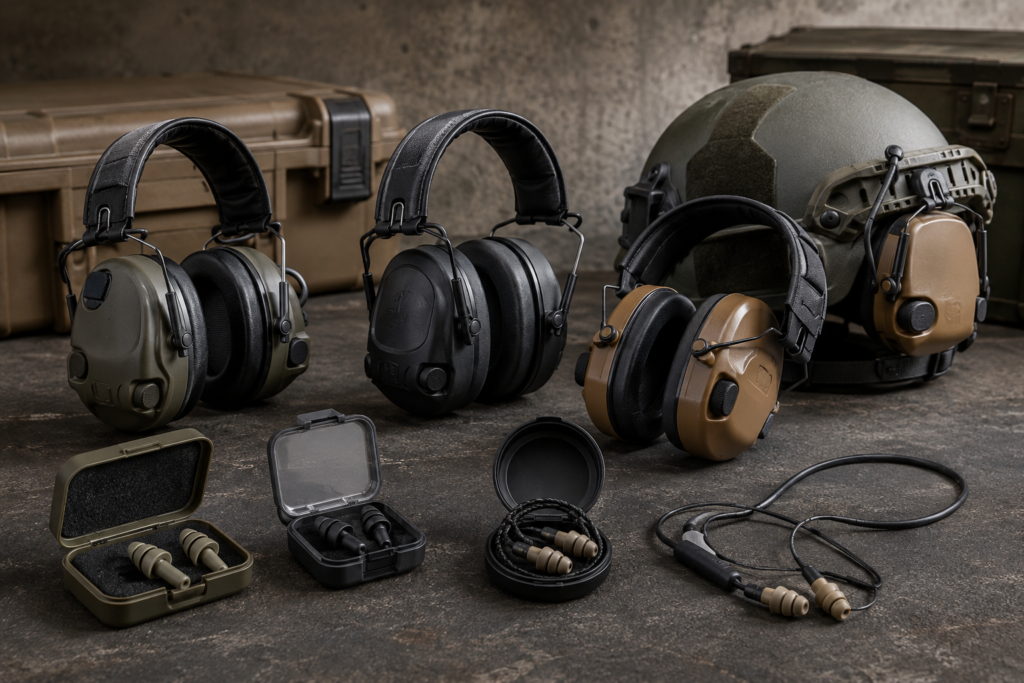
Professional Hearing Protection solutions help reduce exposure to hazardous noise in industrial, emergency-response, transportation and other demanding environments. Available products include passive earmuffs, electronic earmuffs, reusable earplugs and disposable earplugs for different noise levels and operating requirements.
Passive protection uses sound-attenuating materials and sealed ear cushions to reduce surrounding noise. Electronic models can suppress harmful impulse or continuous noise while allowing speech, warning signals and important environmental sounds to remain audible, helping users maintain situational awareness.
Depending on the configuration, electronic earmuffs may incorporate adjustable ambient listening, directional microphones, audio inputs and connectivity with radios or intercom systems. Helmet-mounted and behind-the-neck designs support compatibility with protective helmets, face shields and other personal protective equipment.
Soft ear cushions, adjustable headbands and lightweight materials improve comfort during extended use. Hygiene kits and replaceable components can help maintain performance throughout the product’s service life.
Typical products and features include:
- Passive noise-reduction earmuffs
- Electronic hearing-protection earmuffs
- Disposable and reusable earplugs
- Impulse- and continuous-noise attenuation
- Adjustable environmental listening
- Speech and warning-signal awareness
- Radio and intercom connectivity options
- Helmet-mounted configurations
- Over-the-head and behind-the-neck designs
- Low-profile ear cups
- Adjustable, padded headbands
- Replaceable cushions and hygiene kits
- Compact folding designs
- Weather-resistant models
- Multiple sizes and attenuation levels
Hearing-protection solutions should be selected according to measured noise exposure, required attenuation, wearing duration and compatibility with other protective equipment. Noise-reduction ratings and applicable occupational safety certifications should be verified for the intended market. Proper fitting, regular inspection and hearing-conservation procedures are essential for effective protection.