

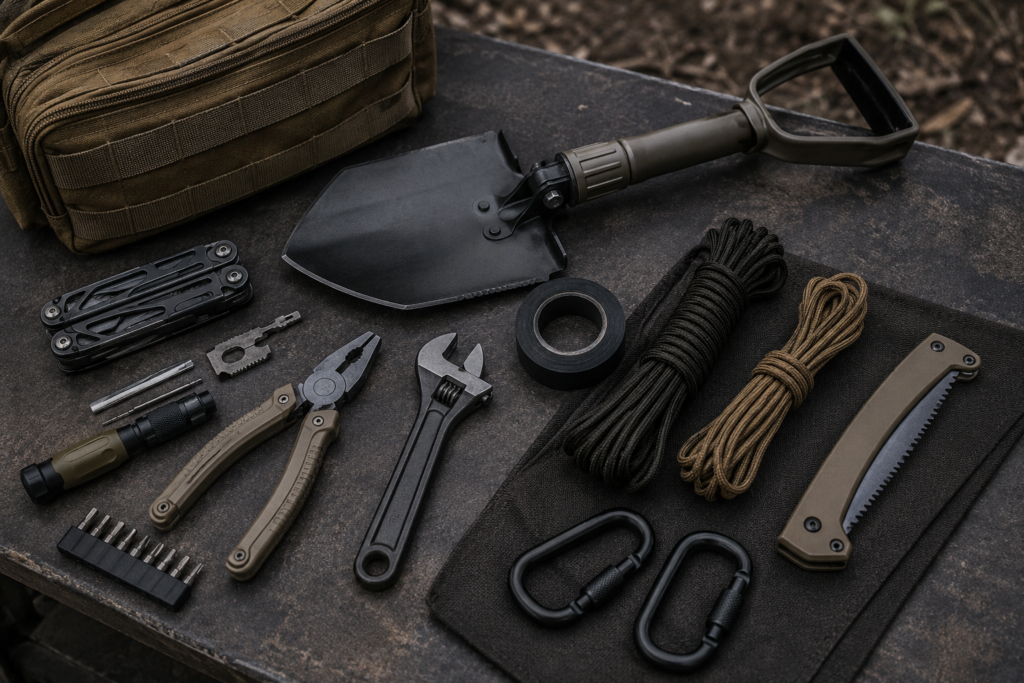
Professional Field Tools provide practical, portable solutions for equipment maintenance, repair, installation and general operational support in remote locations and demanding working environments. Compact and organized tool systems enable field teams to complete routine servicing, emergency repairs and equipment adjustments without relying on permanent workshop facilities.
Depending on operational requirements, available solutions can include multi-tools, hand-tool sets, electrical repair kits, precision instruments, cutting tools, fastening equipment and portable diagnostic devices. Tools can be supplied individually or arranged in task-specific kits for communications, electronics, vehicles, machinery, shelters and other field equipment.
Durable construction, corrosion-resistant finishes and ergonomic grips help ensure reliable operation under frequent use. Insulated, non-sparking, anti-static or intrinsically safe tools may also be available for specialized industrial or hazardous environments.
Rugged cases, roll-up organizers, pouches and modular storage systems keep tools protected, accessible and easy to transport. Customized kits can be configured according to equipment type, maintenance procedure and user requirements.
Typical products and solutions include:
- Multi-tools and compact utility tools
- Screwdrivers, pliers, cutters and wrenches
- Socket, ratchet and fastening-tool sets
- Precision electronics and instrument tools
- Cable preparation and connector tools
- Crimping, stripping and termination equipment
- Portable electrical testing instruments
- Measuring tapes, levels and inspection tools
- Cutting, sawing and drilling accessories
- Adhesive, sealing and temporary-repair materials
- Insulated and anti-static tools
- Non-sparking tools for specialized environments
- Portable maintenance and repair kits
- Rugged tool cases and roll-up organizers
- Customized task-specific tool packages
Field-tool solutions can be configured according to equipment type, maintenance tasks, transport requirements and operating environment. Where insulated, non-sparking or hazardous-area tools are required, their ratings and certifications should be verified against the applicable occupational and electrical safety standards.