
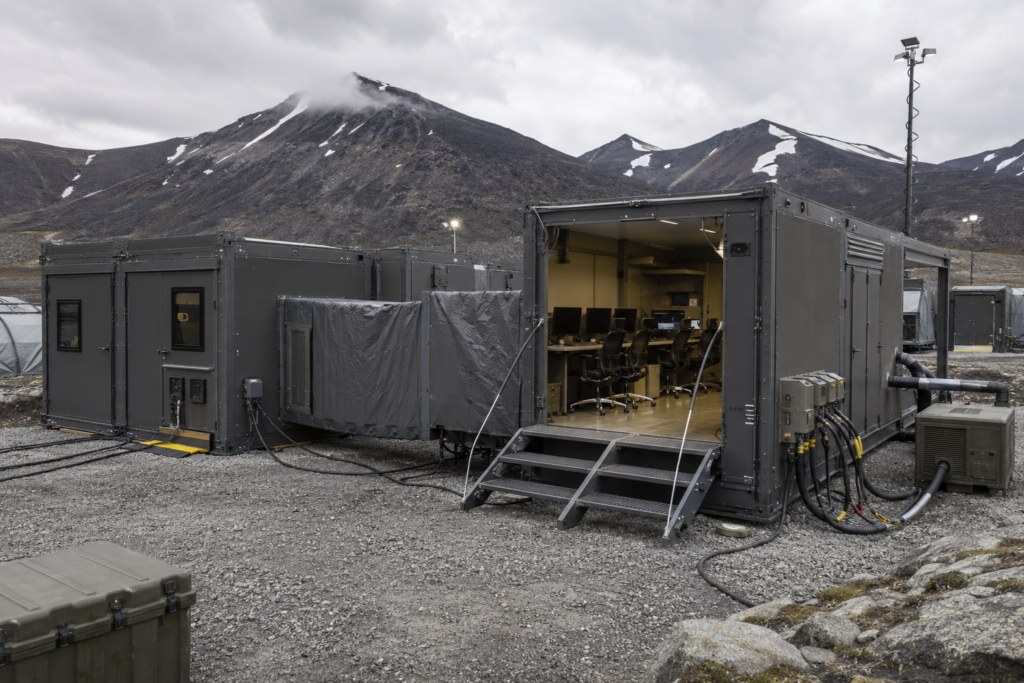
Professional Field Shelters provide durable, configurable and environmentally controlled spaces for temporary facilities, remote operations and emergency deployments. Compared with conventional tents, their reinforced structures and modular construction support longer-duration use, improved equipment protection and more stable internal working conditions.
Depending on operational requirements, available solutions can include containerized shelters, expandable modules, rigid-panel structures, inflatable shelters and vehicle- or trailer-mounted units. They can be configured as command posts, medical rooms, communication centres, laboratories, workshops, accommodation units or secure equipment-storage areas.
Insulated walls, sealed flooring and weather-resistant materials help protect personnel and sensitive equipment from rain, dust, wind and temperature changes. Integrated heating, ventilation and air-conditioning systems can maintain suitable internal conditions across different climates.
Shelters may also incorporate lighting, electrical distribution, data cabling, communication interfaces, water systems, workstations, storage racks and fire-safety equipment. Multiple modules can be interconnected through corridors or vestibules to create larger functional facilities.
Typical configurations and features include:
- Containerized field shelters
- Expandable and fold-out modules
- Rigid-panel modular shelters
- Inflatable and hybrid structures
- Command and communication shelters
- Medical and laboratory units
- Mobile workshops and maintenance shelters
- Personnel accommodation facilities
- Insulated walls, roofs and floors
- Heating, ventilation and air conditioning
- Integrated lighting and electrical distribution
- Data, communication and antenna interfaces
- Water, sanitation and drainage options
- Equipment racks and operator workstations
- Multi-shelter connection and expansion systems
Field-shelter solutions can be customized according to function, personnel capacity, equipment load, deployment duration, climate and transportation method. Structural loading, thermal performance, fire resistance, electrical safety, grounding and environmental-control capacity should be verified for the intended location. Proper site preparation, installation and periodic inspection are essential for safe and reliable operation.