
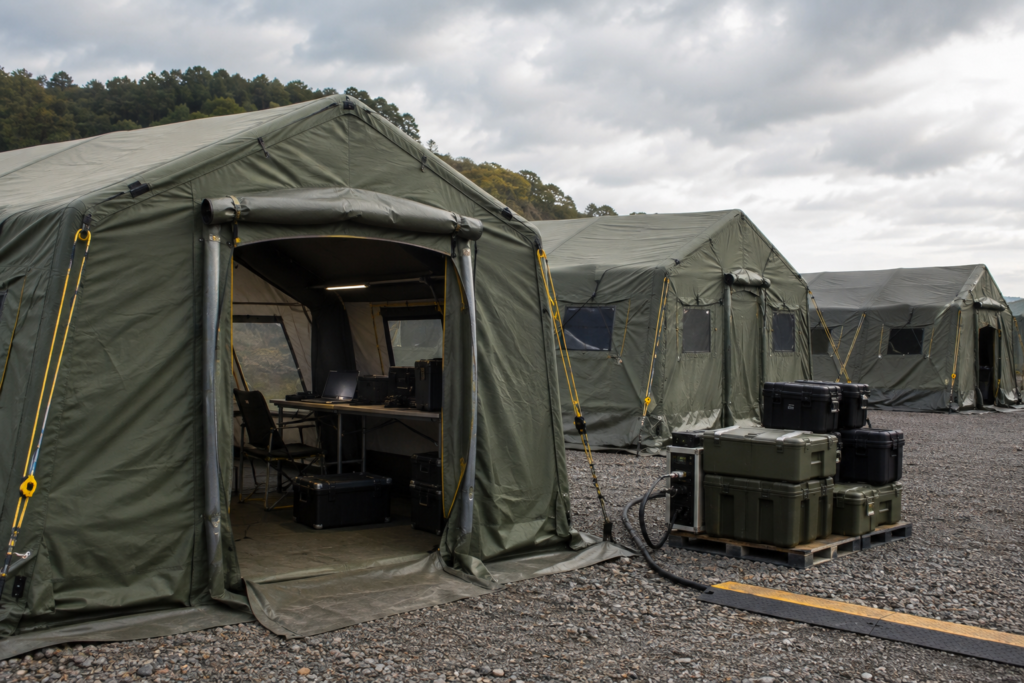
Professional Field Tents provide rapidly deployable, weather-resistant spaces for accommodation, storage, command activities, medical support and other temporary field operations. Modular designs allow functional facilities to be established quickly in remote locations, emergency sites and areas without permanent infrastructure.
Depending on operational requirements, available solutions include frame-supported tents, inflatable tents, pole tents and expandable shelter systems. Different sizes and internal layouts can support sleeping areas, offices, treatment spaces, equipment storage, dining facilities and maintenance activities.
Durable outer fabrics, reinforced frames and protected seams help resist wind, rain, dust and ultraviolet exposure. Insulated liners, flooring systems, vestibules and weather-sealed entrances can improve comfort and environmental protection across different climates.
Lighting, electrical distribution, heating, ventilation and air-conditioning systems can be integrated to create a functional working or living environment. Windows, ventilation openings, cable ports and modular connection corridors support equipment installation and expansion into multi-tent complexes.
Typical products and features include:
- Rapid-deployment frame tents
- Inflatable field tents
- Pole-supported and modular tents
- Accommodation and sleeping tents
- Command and office tents
- Medical and treatment tents
- Storage and maintenance shelters
- Weather-resistant outer fabrics
- Reinforced frames and anchoring systems
- Insulated liners and flooring
- Lighting and electrical distribution
- Heating, cooling and ventilation options
- Cable, duct and equipment-access ports
- Interconnecting corridors and vestibules
- Transport bags, repair kits and accessories
Field-tent solutions can be configured according to personnel capacity, intended function, deployment duration, climate, transport limitations and available utilities. Wind and snow loading, flame resistance, waterproofing, anchoring and electrical-safety requirements should be verified for the intended environment. Proper site assessment, installation and routine inspection are essential for safe operation.