
Professional Portable Generators provide dependable electrical power for field operations, emergency response, temporary facilities and remote working environments where grid electricity is unavailable or unreliable. Compact and rugged configurations support lighting, communication equipment, medical devices, tools, environmental-control systems and other essential loads.
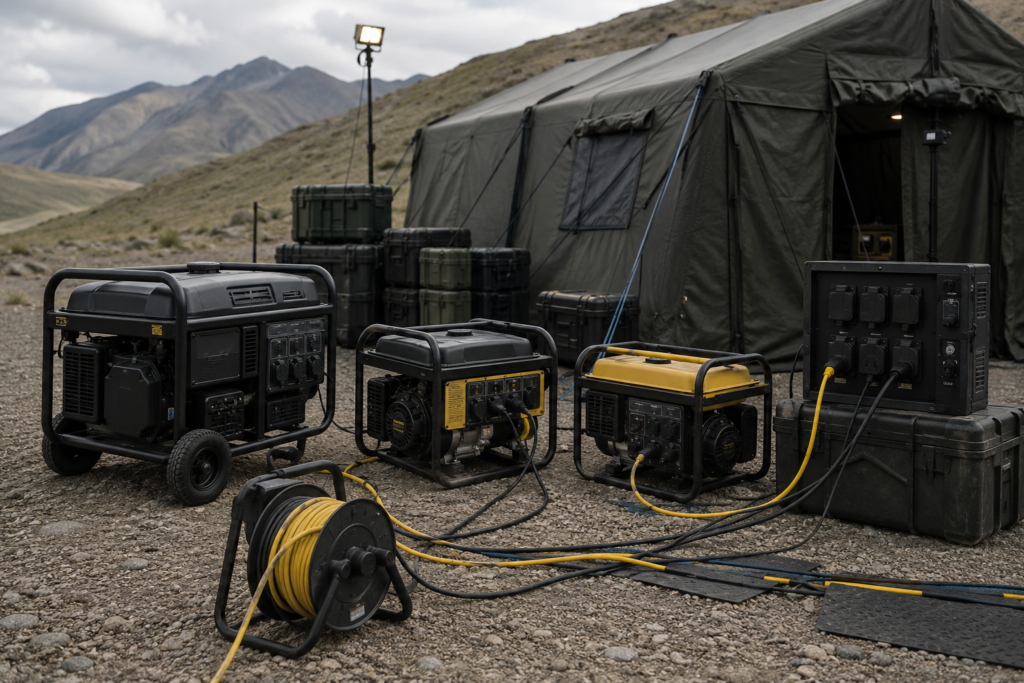
Depending on power requirements, available solutions can include petrol, diesel, gas and hybrid generator sets. Inverter generators provide stable, low-distortion output for sensitive electronics, while conventional and industrial units support larger tools, pumps and temporary site infrastructure.
Manual, electric and remote-start options are available. Selected models may incorporate automatic voltage regulation, economy modes, low-oil shutdown, overload protection, circuit breakers and digital operating displays. Parallel-operation and external fuel-tank options can support higher output or extended operating time.
Open-frame models provide practical power for general field use, while enclosed and low-noise configurations improve weather protection and reduce operational sound. Wheels, folding handles, lifting points and rugged frames support transportation and deployment.
Typical products and features include:
- Petrol and diesel portable generators
- Gas and multi-fuel configurations
- Inverter generators for sensitive equipment
- Open-frame and enclosed designs
- Single-phase and three-phase output options
- Manual, electric and remote starting
- Automatic voltage regulation
- Low-oil and overload protection
- Digital voltage, frequency and runtime displays
- Economy and fuel-saving operating modes
- Parallel-operation capability
- Extended-runtime fuel systems
- Multiple AC and DC output interfaces
- Wheels, handles and lifting frames
- Low-noise and weather-protected options
Portable generator solutions can be configured according to continuous and peak power requirements, output voltage, frequency, fuel availability, runtime and environmental conditions. Electrical loads should be calculated before selection, particularly for equipment with high starting currents. Generators must be operated outdoors or in properly engineered ventilated locations, with suitable grounding, exhaust clearance and carbon-monoxide precautions. Applicable electrical, emissions and safety certifications should be verified for the intended market.