
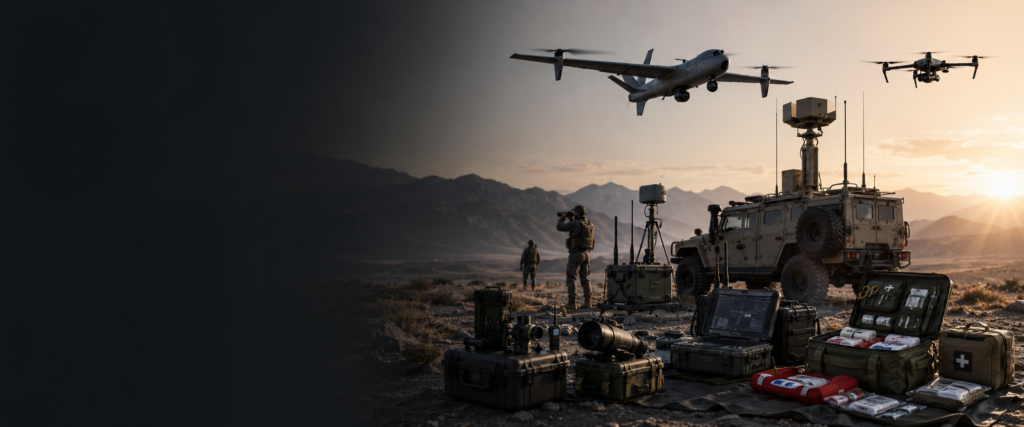
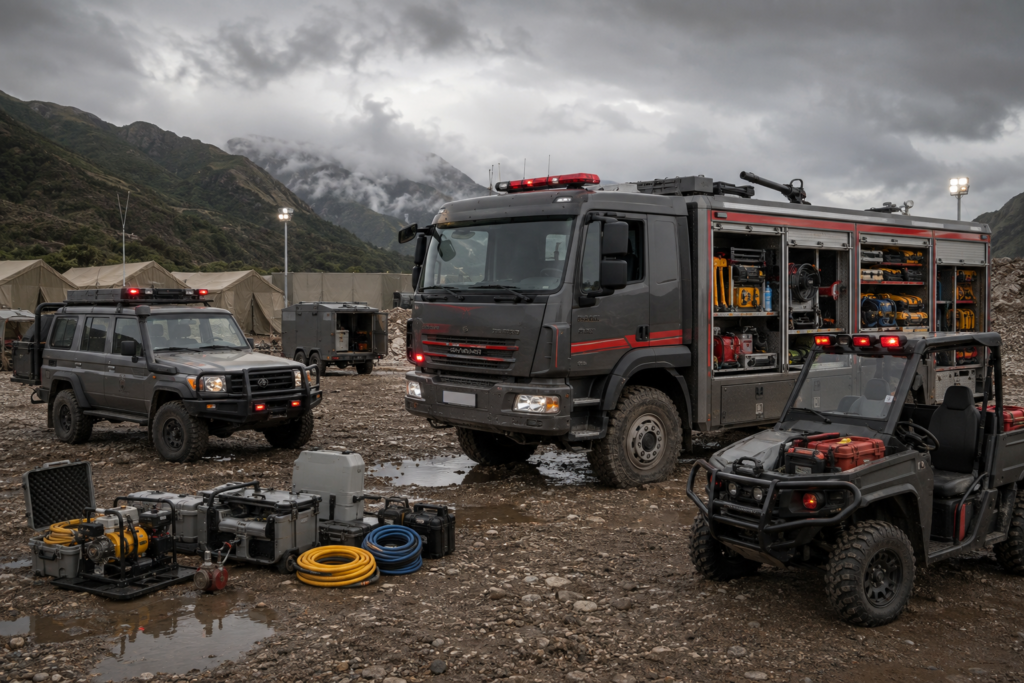
Professional Emergency Response Vehicles are designed to transport personnel, rescue equipment, medical supplies and technical systems rapidly to disaster areas, accident scenes and challenging operational environments. Rugged chassis options, configurable storage and integrated support systems enable response teams to operate effectively where access, infrastructure or environmental conditions are difficult.
Depending on the intended mission, vehicles can be configured for urban rescue, disaster relief, firefighting support, hazardous-material response, technical rescue, flood response or remote-area operations. Available platforms include vans, trucks, pickups, buses, trailers and four-wheel-drive or all-terrain vehicles.
Modular compartments, external lockers and slide-out equipment trays provide organized storage and rapid access to tools, protective equipment, medical kits, lighting systems and rescue devices. Integrated workspaces can support incident coordination, equipment preparation and temporary treatment activities.
Onboard power may be provided through auxiliary batteries, generators, external connections or solar charging. Scene lighting, communication equipment, telescopic masts, winches and environmental-control systems can be incorporated according to operational requirements.
Typical configurations and capabilities include:
- Urban and technical rescue vehicles
- Disaster-response and relief vehicles
- Fire and emergency-support vehicles
- Hazardous-material response vehicles
- Flood and water-rescue support vehicles
- Mobile lighting and power-supply vehicles
- Rescue-tool and equipment transport
- Modular lockers and slide-out storage systems
- Integrated radios and data communications
- Scene lighting and telescopic masts
- Generators and backup battery systems
- Winches, towing and recovery equipment
- Medical and first-aid equipment storage
- Personnel seating and protective-equipment compartments
- Four-wheel-drive and all-terrain chassis options
Emergency response vehicle solutions can be customized according to mission type, crew size, equipment load, terrain, climate and deployment duration. Vehicle homologation, axle loads, equipment restraint, electrical safety and applicable emergency-service standards should be verified for the intended market. Equipment layout and operating procedures should be developed with qualified emergency-response professionals.